The Forgotten Palace of the Gonzagas
In the decades that followed, time and humidity reclaimed the walls. The plaster peeled away, the floors sank, ivy crept through the windows…
Long before the Gonzaga family ruled Mantua, the lands around Portiolo, deep in the Po Valley of northern Italy, belonged to Matilda of Canossa. Around the year 1100, she donated much of the area to the monks of San Benedetto in Polirone, one of the most influential abbeys of medieval Europe.
The flat, fertile landscape — full of water, game, and silence — would later become the perfect backdrop for noble retreats and hunting estates.
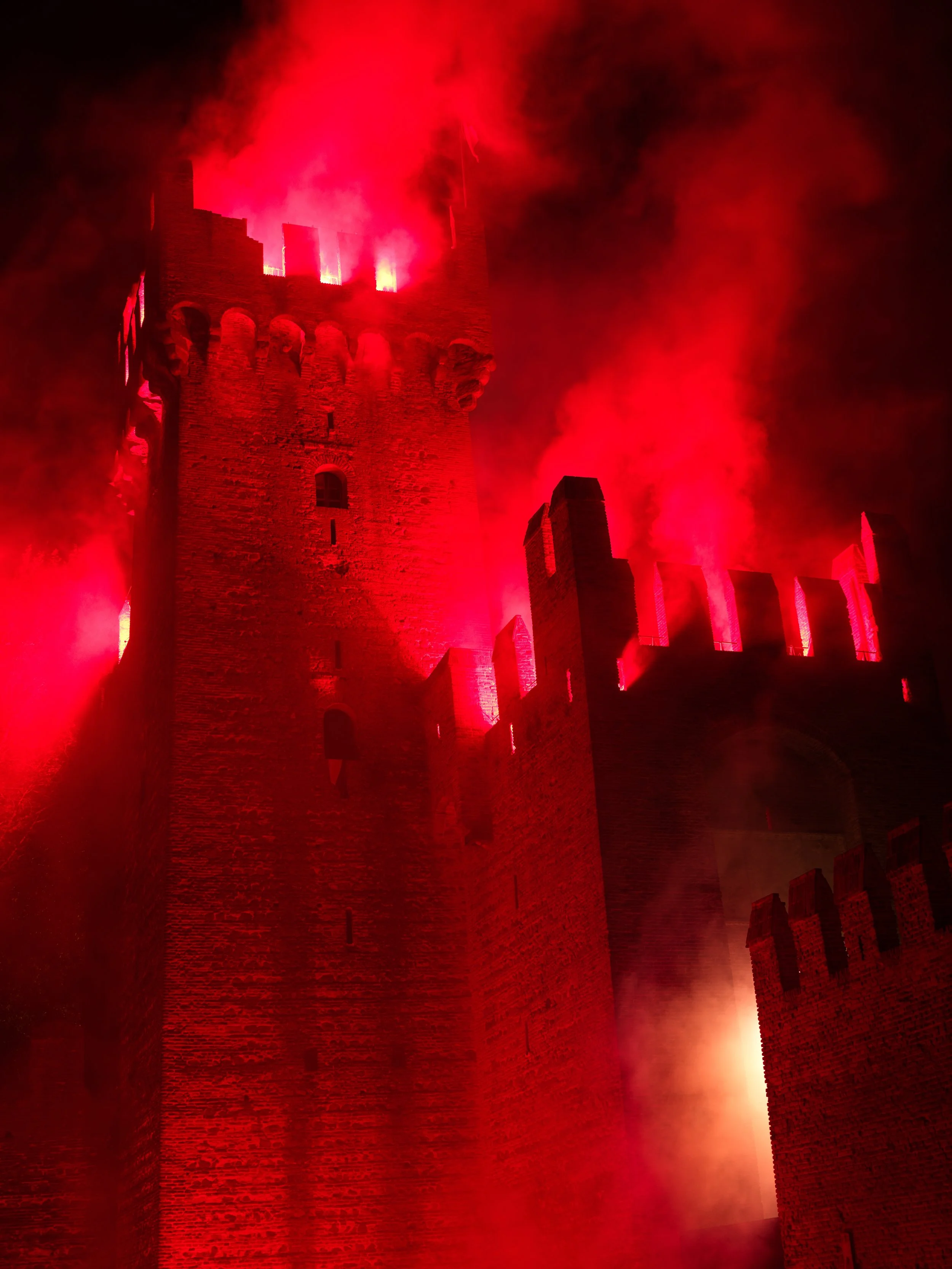
During the 15th and 16th centuries, as the Gonzagas rose to power, they transformed these lands with villas and rural palaces. Among them stood the Corte di Portiolo, which would later be known as Palazzo Gonzaga di Vescovato — a blend of fortress, farm, and noble residence.
The Golden Age
Originally built as a fortified rural court, the villa evolved over time into a noble country residence. The Gonzagas used it for hunting trips, countryside gatherings, and quiet escapes from Mantua’s court life.
Historical accounts describe geometric gardens, elegant arcades, and frescoed halls, where noble guests enjoyed the pleasures of the Renaissance. Architecturally, it mirrored the refined simplicity of the Lombard plain: a large central building flanked by symmetrical wings and inner courtyards.
By the 17th and 18th centuries, the estate had passed to a minor branch of the Gonzaga family. The splendor of Mantua was fading, and with wars, debts, and political decline, so too faded the fortune of this once vibrant retreat. Yet the building endured.
Decline in the 19th Century
During the 1800s, the palace gradually lost its noble function. Parts of it were converted into barns, granaries, or housing for farm workers. Still, much of the structure remained intact: wooden ceilings, ornate staircases, and faded frescoes.
After World War II, the estate was still inhabited by local families. The last resident, according to local lore, was an elderly woman who refused to leave her home. She lived there alone until the 1960s, when the palace finally fell silent. I’m honestly not super sure of this information. Other clues, suggest that there still was a family living here until an eartquake occured in 2012, in all the Mantua’s area.
Abandonment and Legend
In the decades that followed, time and humidity reclaimed the walls. The plaster peeled away, the floors sank, ivy crept through the windows.
By the early 2000s (maybe 2012, after the family left), the site had become a pilgrimage spot for urban explorers — photographers and adventurers drawn to its haunting beauty. Online, it earned a kind of cult status.
The Present
In recent years, authorities have secured and partially restored some areas to prevent further collapse. Access is now restricted, but the building remains one of the most fascinating Gonzaga residences precisely because of its authenticity — half ruin, half relic of lost grandeur.
A Symbol of the Mantuan Plain
Today, those who approach the site can still see the weathered façade, the shuttered windows, and the archways choked by vines, imagining the carriages that once crossed its courtyard.Palazzo Gonzaga di Vescovato stands as a quiet monument to the rise and fall of Renaissance nobility.
The Painted House
I remember feeling dizzy as I left. I remember that, maybe for the first time, I was afraid of the passing of time…
The light — cold and slanted — cuts through the space like in a painting by Hammershøi. On the right, the mannequin stands guard like a forgotten body in a Balthus scene. It has something human about it, yet remains an object — a silent witness. In the back, where the room opens and the warm daylight meets the mess, the metaphysics of de Chirico quietly surfaces.
The villa is enormous. I spend the whole morning photographing it, but that hallway keeps me frozen in place for nearly an hour. Only when the light begins to shift do I finally move to another room.
The rooms are filled with objects. For the first time in years of urban exploration, I feel uneasy — like an intruder stepping into someone’s life uninvited, even though the house is clearly abandoned.
It’s not an ordinary home. There are objects of every kind, and each one feels like it carries its own story. It reminds me a lot of how my father and I decorate our homes — eclectic, creative, sometimes completely illogical. I get the sense that whoever lived here led a rich, passionate life.
I found a letter. It’s written in French. There are no names or references, so I don’t think it’s disrespectful to translate it and include it here, among the photos in this album.
Nîmes, February 12, 1974
My dear friend,
I think I’ve taken a little too long to answer your letter, but I’m following your advice and writing after the noise of the holidays has finally faded. As you know, the “winter blues” hit me hard this year — December and January were rough. I was very tired: a bad cold, a bit of gastritis, and a whole series of minor annoyances… nothing too serious, fortunately. I’m feeling better now.
The tests and doctor visits all came back reassuring, so here I am again, back to work — still confined to bed, yes, but with a calmer mind and a little time on my hands.
Thank you, my dear friend, for your kind wishes, which I return with all my heart. Above all, I wish you good health, for you and your family, and much happiness surrounded by your children and grandchildren. Let’s hope for many more good hours shared together.
I remember feeling dizzy as I left. I remember that, maybe for the first time, I was afraid of the passing of time.
A walk inside a novel
When I visited it, the place hadn’t been vandalized yet. It felt like stepping straight into the pages of Murakami’s Dance Dance Dance, with echoes of Kubrick and King hanging in the air. The whole complex was massive — endless hallways, silent rooms, a strange stillness that made time feel uncertain. But there was only one thing that truly stayed with me: the central hall. That room… I’ll never forget it.
The Grand Hotel et de Milan in Salsomaggiore Terme stands as one of Italy’s most fascinating testaments to the Belle Époque era — a time when luxury, wellness, and art came together under the banner of European elegance.
It was at the turn of the 20th century, when Salsomaggiore Terme was emerging as one of the most fashionable spa destinations in Europe, that the Grand Hotel was conceived. The town’s saline-bromine-iodine waters were celebrated for their healing properties, attracting aristocrats, diplomats, and artists from across the continent. To accommodate this sophisticated clientele, the local elite commissioned a grand hotel that could rival the finest establishments in Paris, London, and Vienna.
Designed by the Milanese architect Luigi Broggi, the hotel opened its doors in 1901 under the name Grand Hôtel des Thermes. It was a marvel of its time — over three hundred rooms, state-of-the-art heating, a vast park, tennis courts, and sumptuous interiors decorated in the Liberty style. Everything about it spoke of modernity and refinement. In the years that followed, the hotel caught the attention of famed hoteliers César Ritz and Alphons Pfyffer, who took over its management and, eventually, ownership around 1910. Under their direction, the Grand Hotel became one of the jewels of European hospitality.
The 1920s brought a new wave of artistic splendor. The architect Ugo Giusti and the celebrated artist Galileo Chini enriched the building with bold Liberty and Moorish-inspired decorations. The Salone Moresco, with its intricate patterns and glowing colors, remains one of the most remarkable examples of early 20th-century interior design in Italy. For decades, the Grand Hotel was the beating heart of Salsomaggiore’s high society — a place where elegance met leisure, and where the international elite came to take the waters, dance, and dine in opulent surroundings.
But like many symbols of the Belle Époque, the hotel’s golden age could not last forever. After World War II, tastes and economies changed. Tourism shifted, and Salsomaggiore’s glamorous clientele began to fade.
When I visited it, the place hadn’t been vandalized yet. It felt like stepping straight into the pages of Murakami’s Dance Dance Dance, with echoes of Kubrick and King hanging in the air. The whole complex was massive — endless hallways, silent rooms, a strange stillness that made time feel uncertain. But there was only one thing that truly stayed with me: the central hall. That room… I’ll never forget it.
Western Village
Western Village, tucked away near Nikkō, was once a full-scale Wild West theme park — a surreal slice of America deep in Japan. It opened in 1975, when Enichi Ominami decided to turn his family ranch into a living, breathing frontier town.
During my first trips to Japan, I stumbled upon an abandoned place that instantly reminded me of Westworld (1973) — the original one, with Yul Brynner as the villain. And what a villain he was — an unstoppable machine, like the T-800 or the T-1000, but eleven years earlier.
My first visit to that abandoned park, filled with robots, shattered plastics, exposed circuits, and a haunting silence, was one of the most intense exploration experiences I’ve ever had. I had such a strong urge to rescue one of those robots and bring it back to life. One of them was the Sheriff. I found him near a caravan — someone had stripped off his clothes, leaving his transparent plastic body exposed, revealing all his inner circuits.
I went back years later, and then again. Each time, it looked worse — thanks to all the Western You Tubers who went there for Halloween, flipping everything upside down, filming goofy skits with the robots, undressing them, breaking them, making them smoke — all kinds of nonsense that could’ve easily been avoided. The last time I went, they had already started dismantling the place, probably to clear and sanitize the area. Such a shame. Western Village, tucked away near Nikkō, was once a full-scale Wild West theme park — a surreal slice of America deep in Japan.
It opened in 1975, when Enichi Ominami decided to turn his family ranch into a living, breathing frontier town. This wasn’t just a facade of saloon fronts and cardboard cowboys; it was a proper town, complete with dusty streets, arcades, bars, and life-sized buildings you could actually walk through.
The park was famous for its animatronic robots and elaborate set pieces — from staged cowboy shootouts to a robotic Abraham Lincoln who’d greet visitors with an eerie, slow-motion charm. For a while, it thrived as one of Japan’s most unique and eccentric attractions.But by the early 2000s, Western Village’s glory days had faded. Bigger, flashier parks like Tokyo Disneyland drew the crowds away, and the cost of maintaining hundreds of aging robots and mechanical shows became unsustainable. Attendance plummeted, repairs piled up, and in 2007, the park finally closed its doors for good.
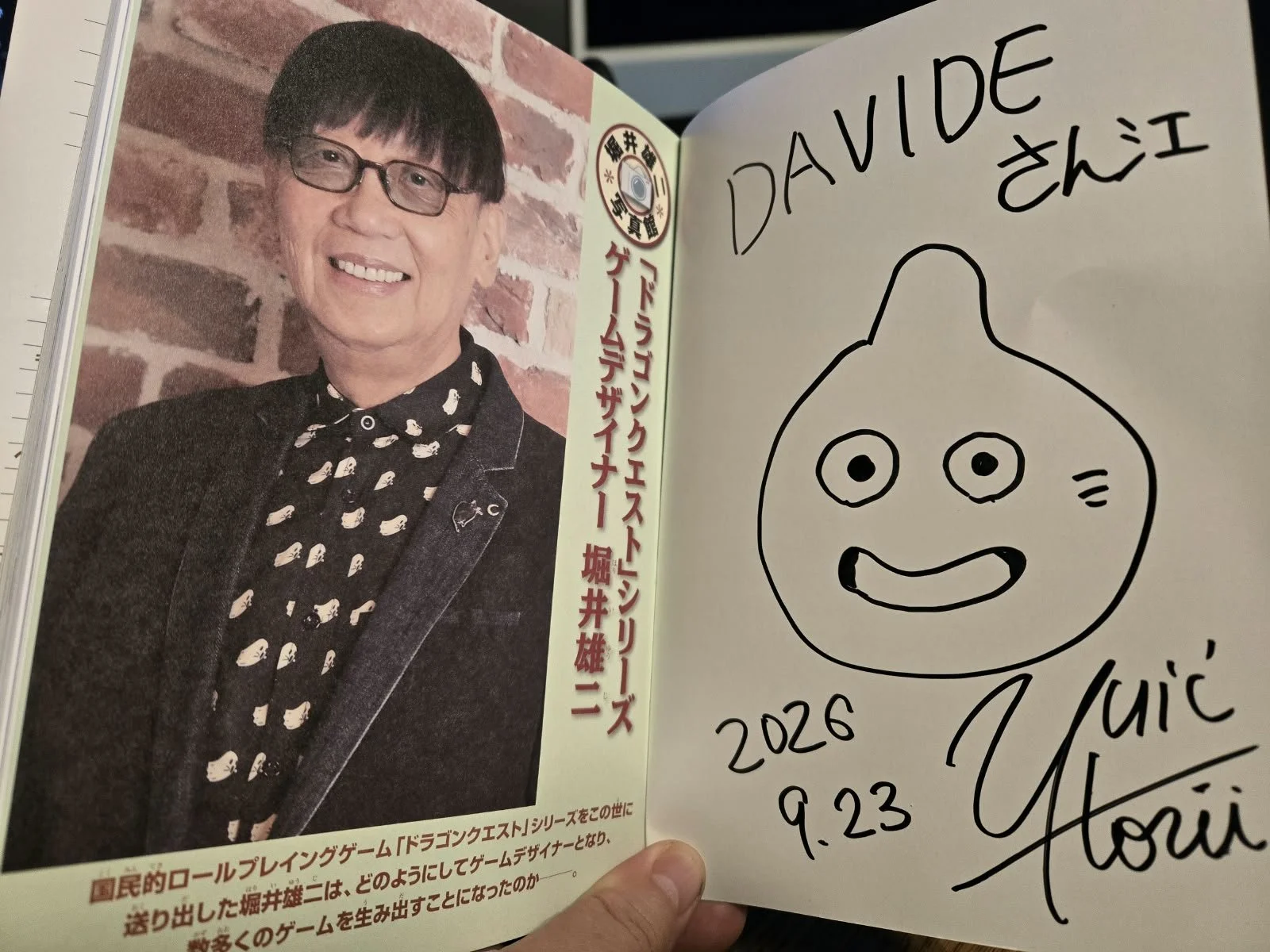
Davide Soliani Blog:
This is about my trips, adventures, challenges in landscapes photography, video games, interviews, food, or anything I think it’s worth sharing.
-
marzo 2026
- 9 mar 2026 What's Shenmue 9 mar 2026
- 4 mar 2026 Californication Bass Cover 4 mar 2026
- 3 mar 2026 Dark Necessities Bass Cover 3 mar 2026
-
febbraio 2026
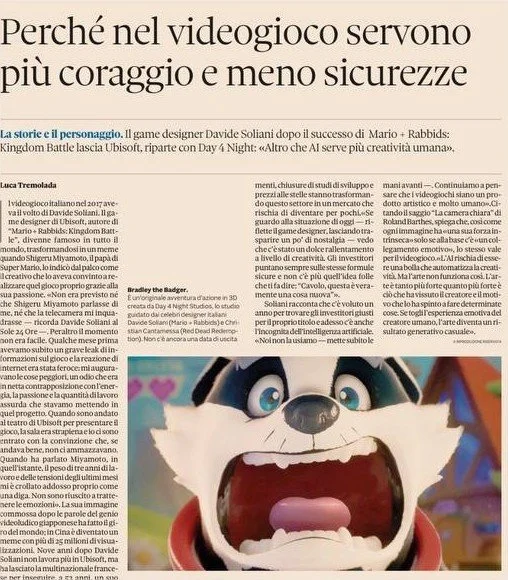
- 22 feb 2026 Bradley The Badger 22 feb 2026
- 21 feb 2026 Maddalena 21 feb 2026
-
gennaio 2026
- 12 gen 2026 Alice 12 gen 2026
- 8 gen 2026 Roberto Villa 8 gen 2026
-
dicembre 2025
- 21 dic 2025 Filanda Pregiata 21 dic 2025
-
novembre 2025
- 11 nov 2025 The Forgotten Palace of the Gonzagas 11 nov 2025
-
ottobre 2025
- 30 ott 2025 The Creature from Cusago 30 ott 2025
- 29 ott 2025 The Painted House 29 ott 2025
- 26 ott 2025 A walk inside a novel 26 ott 2025
- 19 ott 2025 Western Village 19 ott 2025
-
settembre 2025
- 22 set 2025 Back to Hasselblad 22 set 2025
-
ottobre 2024
- 21 ott 2024 Busy busy busy 21 ott 2024
-
luglio 2024
- 30 lug 2024 I'm leaving 30 lug 2024
-
giugno 2024
- 21 giu 2024 Why are we enjoying taking street photos? 21 giu 2024
-
maggio 2024
- 27 mag 2024 My name is Ferrania 27 mag 2024
- 13 mag 2024 Social Interactions 13 mag 2024
-
aprile 2024
- 22 apr 2024 Urban Vibe 22 apr 2024
- 8 apr 2024 Fujifilm X100VI - A portable beauty 8 apr 2024
-
febbraio 2024
- 18 feb 2024 Fuji GFX Stress Test in Venice 18 feb 2024
- 5 feb 2024 Print it! 5 feb 2024
-
gennaio 2024
- 21 gen 2024 Out of my comfort zone 21 gen 2024
-
dicembre 2023
- 31 dic 2023 Mr Whimsy and the pink truck 31 dic 2023
- 15 dic 2023 In the shadow of the Momumental 15 dic 2023
-
ottobre 2023
- 21 ott 2023 Nights follows nights 21 ott 2023
- 19 ott 2023 A poem for Tokyo 19 ott 2023
- 12 ott 2023 Landscape and a Hassy: #4 Hasigui-Iwa 12 ott 2023
- 9 ott 2023 Street Photography: #23 Milan 9 ott 2023
-
settembre 2023
- 29 set 2023 Street Photography: #22 Nagoro Village 29 set 2023
-
ottobre 2022
- 9 ott 2022 Street Photography: #21 San Francisco 9 ott 2022
-
settembre 2022
- 13 set 2022 Street Photography: #20 New York 13 set 2022
- 7 set 2022 Street Photography: #19 Lombardy Palace 7 set 2022
- 6 set 2022 Street Photography: #18 Street à la sauvette 6 set 2022
-
luglio 2022
- 30 lug 2022 Street Photography: #18 The Beccaria Castle needs you 30 lug 2022
- 24 lug 2022 Landscape and a Hassy: #3 Japan is an Emerald 24 lug 2022
-
dicembre 2021
- 27 dic 2021 Landscape and a Hassy: #2 Val D'Orcia 27 dic 2021
-
novembre 2021
- 29 nov 2021 Street Photography: #17 I'm not Helmut 29 nov 2021
- 11 nov 2021 Landscape and a Hassy: #1 Trabucchi 11 nov 2021
- 8 nov 2021 Street Photography: #16 Eternal Bliss 8 nov 2021
- 7 nov 2021 Street Photography: #15 Biennale Venezia - Architecture 7 nov 2021
-
agosto 2021
- 9 ago 2021 Street Photography: #14 Keep moving 9 ago 2021
-
maggio 2021
- 27 mag 2021 Street Photography: #13 Jacky Tonight 27 mag 2021
- 20 mag 2021 Street Photography: #11 The Zanon blacksmith workshop 20 mag 2021
- 17 mag 2021 Street Photography: #10 A beautiful flower 17 mag 2021
-
aprile 2021
- 25 apr 2021 Street Photography: #9 My grandfather was a plumber 25 apr 2021
- 19 apr 2021 Out Of Curiosity: Grant Kirkhope 19 apr 2021
- 8 apr 2021 Street Photography: #8 City Life 8 apr 2021
- 6 apr 2021 A Mandolin for Miyamoto San 6 apr 2021
- 2 apr 2021 Chernobyl drama: #10 Hospital N°134 2 apr 2021
-
marzo 2021
- 29 mar 2021 Street Photography: #7 Sunday walks 29 mar 2021
- 28 mar 2021 Four Past Midnight: A chat with Yuri Abietti 28 mar 2021
- 26 mar 2021 Chernobyl drama: #9 The 5th cooling tower 26 mar 2021
- 24 mar 2021 Video game diaries: #4 Just Dance 24 mar 2021
- 23 mar 2021 Street Photography: #6 Conca dell'Incoronata in Milan 23 mar 2021
- 22 mar 2021 Edge 22 mar 2021
- 21 mar 2021 Street Photography: #5 Lockdown outlaws 21 mar 2021
- 20 mar 2021 Chernobyl drama: #8 The palace of culture Energetik 20 mar 2021
- 20 mar 2021 Chernobyl drama: #7 The Kindergarten 20 mar 2021
- 19 mar 2021 Attack on Titans 19 mar 2021
- 17 mar 2021 Chernobyl drama: #6 The lonely school desk 17 mar 2021
- 17 mar 2021 Don't bother the sleeping Smasher 17 mar 2021
- 16 mar 2021 Chernobyl drama: #5 Bermuda Triangle 16 mar 2021
- 16 mar 2021 Charles Martinet: The gentle giant 16 mar 2021
- 15 mar 2021 Nendoroid - Series: Amaterasu DX Ver. 15 mar 2021
- 14 mar 2021 Street Photograhy: #4 Rahiblovi the traveler 14 mar 2021
- 13 mar 2021 Really Right Food: #2 La Ravioleria Sarpi - Milan 13 mar 2021
- 13 mar 2021 Chernobyl drama: #4 Pripyat Ghost city 13 mar 2021
- 12 mar 2021 Video game diaries: #3 Rabbid Kong 12 mar 2021
- 11 mar 2021 Chernobyl drama: #3 Data collection center - meeting room 11 mar 2021
- 11 mar 2021 Chernobyl drama: #2 Duga radar 11 mar 2021
- 11 mar 2021 To the infinite and beyond 11 mar 2021
- 10 mar 2021 Chernobyl drama: #1-Vehicles storage 10 mar 2021
- 9 mar 2021 Monsters in the Dark: The Making of X-COM: UFO Defense 9 mar 2021
- 9 mar 2021 The strange mystery of Ubisoft Milan 9 mar 2021
- 6 mar 2021 Street Photography: #3 Paolo Sarpi - Milan 6 mar 2021
- 5 mar 2021 Video Game Diaries: #2 Flowers in your weapons 5 mar 2021
- 4 mar 2021 The most magical place on planet earth 4 mar 2021
- 3 mar 2021 Video Game Diaries: #1 Custom Nintendo Switch dock 3 mar 2021
- 3 mar 2021 Street Photography: #2 Streets of Milan 3 mar 2021
- 2 mar 2021 An incredible rollercoaster 2 mar 2021
- 1 mar 2021 Sensō-ji Temple 1 mar 2021
-
febbraio 2021
- 28 feb 2021 Really Right Food: #1 Osteria Magenes - Barate di Gaggiano - Italy 28 feb 2021
-
settembre 2020
- 30 set 2020 Street Photography: #1 Venice - The greatest enigma 30 set 2020
- 16 set 2020 Webinar - A Chernobyl con Davide Soliani e l’Islanda di Vieri Bottazzini 16 set 2020
- 9 set 2020 Hasselblad Webinar about Chernobyl and Iceland 9 set 2020
-
agosto 2020
- 11 ago 2020 Corto Sconto 11 ago 2020
- 3 ago 2020 Legends and Misteries in Venice 3 ago 2020
Shenmue hit me like a bolt from the blue. It was unbelievable for the time — a game that pushed far beyond the boundaries of anything I was used to…